

IWHC Milestones
For more than 50 years, the Immigrant Women’s Health Centre has been breaking down barriers to healthcare through innovation, advocacy, and community partnerships. Explore the milestones that have shaped our journey and our continued commitment to equitable, accessible care.
The 1970’s
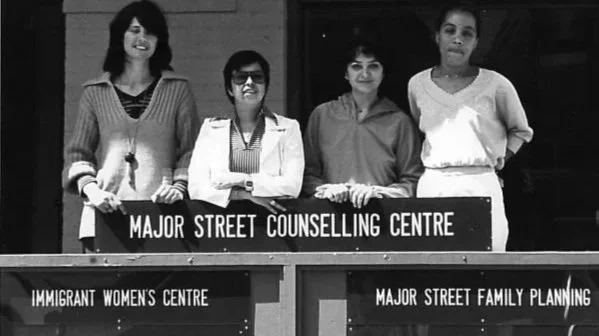
The Immigrant Women’s Health Centre was founded in 1975 in response to a growing need for sexual health services that immigrant women could access in their own languages. After the Birth Control and Venereal Disease Centre (BCVD) identified this gap, Carolyn Egan led the effort to secure Public Health funding for a dedicated clinic, bringing this vision to life.
The 1980’s
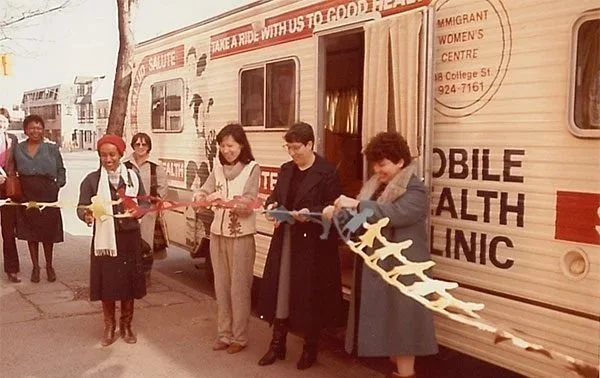
By the 1980s, the Immigrant Women’s Health Centre was looking for new ways to expand access to sexual health education and clinical services across Toronto. In partnership with Toronto Public Health, the Centre launched a three-year pilot project to transform a vehicle into a mobile clinic serving immigrant women working in factories. The Mobile Health Clinic Program was born.
The mobile clinic provided essential services, including Pap tests, breast exams, STI testing, birth control counselling, and blood pressure checks. In addition to clinical care, IWHC staff delivered sexual health and family planning education through lunchtime workshops held directly on factory floors, making care and information more accessible to women where they worked.

The 1990’s
During the 1990s, the Immigrant Women’s Health Centre expanded its Mobile Health Clinic Program beyond factories to reach community agencies, ESL schools, and religious organizations across Toronto. The goal was to bring sexual health services directly to underserved and hard-to-reach communities, reducing barriers to care.
Throughout the decade, IWHC partnered with labour unions, the AIDS Committee of Toronto, HIV Prevention Grants, Pride Toronto, York Central Hospital, and many other community organizations to extend its reach. Services were offered in numerous languages—including Greek, Farsi, Hindi, Urdu, Punjabi, Bengali, Polish, Croatian, Portuguese, Spanish, Mandarin, Cantonese, Vietnamese, and Italian—through a network of trained peer counsellors, ensuring culturally responsive care for diverse communities.
The 2000’s
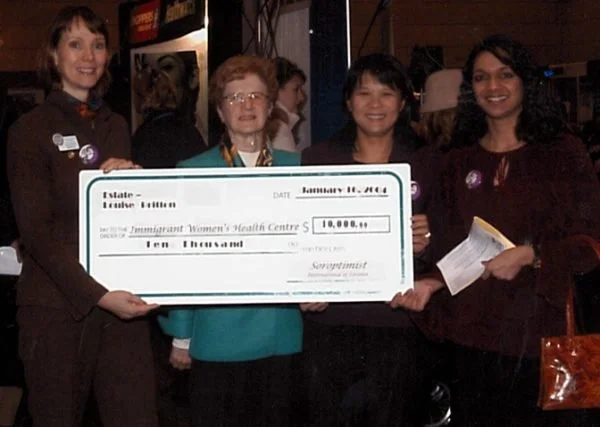
As the 1990s came to a close, it became clear that the original Mobile Health Clinic could no longer meet the growing demand for its services. In response, the Immigrant Women’s Health Centre established a Mobile Health Clinic Funding Committee to raise more than $300,000 for a new, purpose-built mobile clinic designed by IWHC staff.
The project was made possible through the generous support of many partners and donors. The Ford Motor Company donated a new vehicle chassis, while additional funding was provided by the Steelworkers Union, the Tides Foundation, Toronto Public Health, the Atkinson Foundation, McGregor Socks, and numerous other community supporters.
In 2005, the new Mobile Health Clinic was officially launched at Toronto City Hall, marking a significant milestone in IWHC’s commitment to delivering accessible, community-based healthcare across Toronto.
The 2010’s
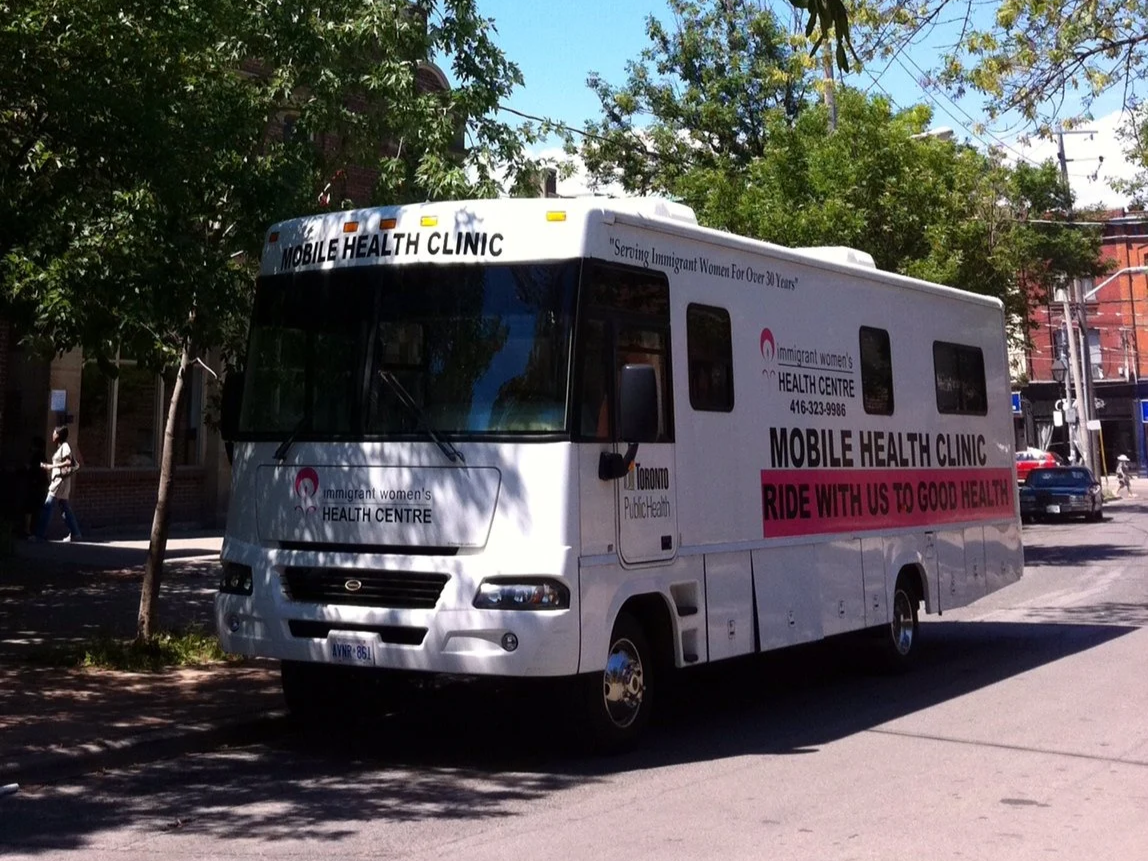
Throughout the 2010s, the Mobile Health Clinic Program reached new heights, serving nearly 1,000 clients each year across Toronto while providing sexual health education to thousands more through community workshops. The program collaborated with more than 50 partner agencies, delivering culturally responsive care to diverse communities in multiple languages.
The Mobile Health Clinic gained widespread recognition for its innovative approach to healthcare delivery. It was featured in media and news coverage and highlighted in AstraZeneca’s Beyond Barriers photo journal, which showcased frontline healthcare initiatives. The program also earned international recognition as a model for mobile healthcare, with healthcare professionals from around the world visiting IWHC to learn from and replicate its community-based approach.
After decades of bringing essential healthcare directly to underserved communities, the Mobile Health Clinic was retired in 2019, leaving a lasting legacy of accessible, equitable, and innovative care.

Present
Today, the Immigrant Women’s Health Centre (IWHC) continues its longstanding commitment to providing accessible, inclusive, and culturally responsive sexual and reproductive healthcare. While the Mobile Health Clinic has been retired, IWHC remains dedicated to reducing barriers to care by offering clinical services, health education, outreach, and advocacy that reflect the diverse needs of the communities it serves.
Building on more than 50 years of experience, IWHC works in partnership with community organizations, healthcare providers, and public health agencies to promote health equity and improve access to care for underserved populations. Through a patient centred approach grounded in dignity, respect, and inclusion, the organization continues to empower individuals with the knowledge, resources, and support they need to make informed decisions about their sexual and reproductive health.
As IWHC looks to the future, the organization has embraced a refreshed brand identity that reflects its continued growth, evolving community impact, and enduring mission. While its look has evolved, its purpose remains unchanged: to provide compassionate, equitable, and accessible care for all. The brand refresh represents more than a new visual identity it signals IWHC’s commitment to innovation, strengthening community partnerships, and meeting the changing needs of the diverse populations it serves for generations to come.